Enter
To perform a search
PBG (Persetujuan Bangunan Gedung) is a document whose verification process is legally limited to a maximum of 28 working days from the date of application.[1] This timeframe reflects the government's commitment to tightening building legality standards over the past few years.
However, many people still refer to it as an IMB (Building Permit) when checking a property's legal status, even though the terminology change has been officially implemented. This is not merely a change in name it represents a fundamental shift in the philosophy of building regulation and supervision.
If you're still relying on the old term, here's what you need to know.
Building Approval (PBG) is a permit that must be obtained to construct, modify, expand, reduce, or maintain a building in accordance with established technical standards.
This requirement is stipulated under Law No. 11 of 2020 on Job Creation (Omnibus Law), Article 24 and Article 185(b), with implementing regulations under Government Regulation No. 16 of 2021.[2]
While IMB mainly functioned as an administrative permit obtained before construction, PBG goes further. It requires compliance with technical and safety standards rather than serving as a one-time administrative document that is filed away and forgotten.
Since the underlying philosophy has changed, the differences between PBG and IMB extend across three levels.
IMB was based on Law No. 28 of 2002 on Buildings, which is no longer the governing framework.
PBG, on the other hand, is based on the Job Creation Law and Government Regulation No. 16 of 2021.
IMB primarily emphasized administrative completeness, such as:
Land ownership status
Ownership documents
PBG focuses on compliance with technical standards, including:
Architectural requirements
Structural requirements
Mechanical, electrical, and plumbing (MEP) systems
Previously, IMB only required owners to declare the intended function of the building.
Under PBG, owners must not only declare the building's intended use but also ensure that the use complies with local spatial planning regulations (RTRW/RDTR).
In other words, it is no longer enough to state what the building will be used for you must also verify that the intended use is permitted in the specific location where the property is built.
So, does having an old IMB automatically make your property illegal today?
No.
If your IMB was issued before 2021 and there have been no major renovations or changes in building function, it remains valid and there is no automatic requirement to convert it into a PBG.[3]
What documents are required to obtain a PBG?
In general, the process involves six steps through the SIMBG (Building Management Information System) platform:
Register an account at simbg.pu.go.id
Complete applicant and building information
Upload technical planning documents (architecture, structure, and MEP)
Wait for verification by the local technical review team
Pay the applicable regional levy
Receive the digital PBG once all stages are approved
The verification process generally takes 14 to 28 working days, depending on the complexity of the building and the completeness of the submitted documents.[4]
What happens if a building is constructed without a valid PBG?
The consequences go beyond warning letters or building seals.
Without a PBG, obtaining a Certificate of Proper Function (SLF) becomes impossible.
This is particularly important because:
SLFs for simple detached and row houses generally do not have an expiration period.
SLFs for residential buildings of up to two floors are valid for 20 years.
SLFs for non-simple residences and other building types are valid for 5 years.[5]
Without a PBG, the entire chain of building legality is effectively broken from the very beginning.
What if you're simply buying a completed house rather than building one from scratch?
You may not need to apply for a PBG yourself, but you should verify that the property already has a valid PBG or IMB issued by the developer.
Why is this important?
Because without proper documentation, the legal standing of the building becomes vulnerable, and future sanctions could still affect you as the new owner even if you were not the party that constructed the building.
A building that failed to meet technical standards from the outset does not automatically become "safe" simply because ownership has changed.
It's also important to understand that building legality differs from land legality.
Documents such as HGB (Right to Build) or SHM (Freehold Title) govern land ownership rights.
PBG or IMB governs the legality of the building itself.
They are two separate documents regulating two different aspects of the same property and both should be verified before signing any transaction documents.
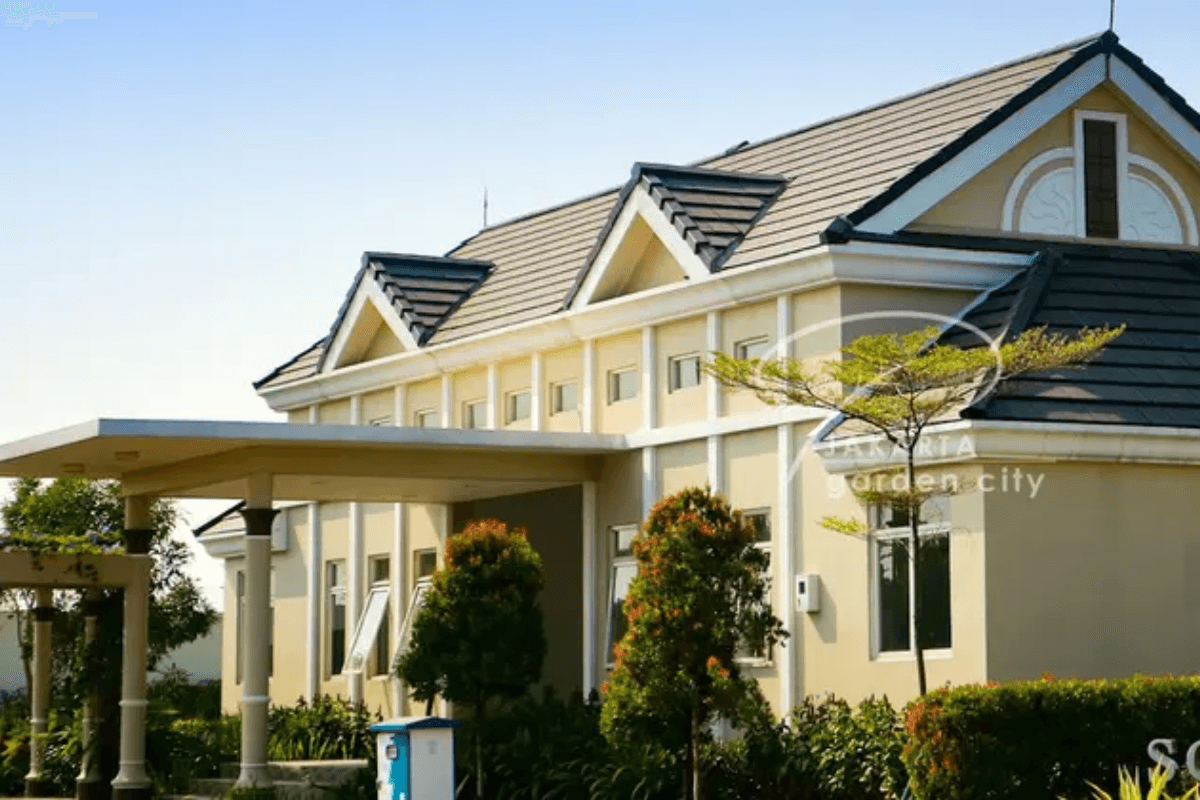
As a master-planned township development, units at Jakarta Garden City (JGC) generally undergo permitting processes at the developer level, including compliance with technical building standards.
This differs from many secondary-market properties, where permit histories can sometimes be difficult to trace after multiple ownership transfers and incomplete documentation.
However, this does not mean buyers should stop asking questions.
Permit status may vary between clusters or development phases, even within the same township.
Therefore, verifying the legal status of the specific unit you are interested in is a prudent step rather than assuming that all units share identical documentation simply because they were developed by the same company.
Building legality does not end with the developer.
It directly affects your legal standing as the property's future owner long after the transaction is completed.
Verifying a property's legal status from the outset is far easier and less costly than dealing with legal or operational issues later on.
In short, PBG is one of the least-discussed documents among homebuyers, yet one of the most important for ensuring long-term property security.
This level of legal clarity is one reason why units at Jakarta Garden City deserve consideration from the earliest stages of your property search.
Consult with the JGC team to explore available units and verify their legal status before making your decision.

| Monday - Saturday | : | 09:00 - 20:00 WIB |
| Sunday | : | 09:00 - 21:00 WIB |